
Rumah
Melayu

50+ Web3 and Blockchain Keywords Explained

- Web3.0: Web3.0, also known as Web3, refers to the next generation of the internet that incorporates decentralized technologies such as blockchain, cryptocurrencies, and peer-to-peer networks. Web3.0 aims to empower users with more control over their data, privacy, and online interactions. It envisions a more open, transparent, and user-centric internet.
- Decentralization: Decentralization refers to the distribution of control and decision-making across a network, rather than being held by a central authority. In the context of Web3 and blockchain, decentralization is a key principle that aims to eliminate the need for intermediaries and allows participants to have more control over their data and transactions.
- Smart Contract: A smart contract is a self-executing contract with the terms of the agreement directly written into code. Smart contracts are deployed on blockchain platforms and automatically execute predefined actions when certain conditions are met. They enable trustless and transparent interactions between parties.
- Decentralized Finance (DeFi): Decentralized Finance (DeFi) refers to the use of blockchain technology and smart contracts to recreate traditional financial systems in a decentralized manner. DeFi aims to provide financial services such as lending, borrowing, and trading without the need for intermediaries like banks. It enables greater accessibility and transparency in financial transactions.
- Non-Fungible Token (NFT): A Non-Fungible Token (NFT) is a unique digital asset that represents ownership or proof of authenticity of a specific item or piece of content. NFTs have gained popularity in the art and collectibles space. Each NFT has a unique identifier and cannot be exchanged on a one-to-one basis like cryptocurrencies.
- Interoperability: Interoperability refers to the ability of different blockchain networks or systems to communicate and interact with each other seamlessly. It is important for enabling data and asset transfer between different blockchains and ensuring compatibility between various chains.
- Consensus Mechanism: A consensus mechanism is a protocol or algorithm used to achieve agreement among participants in a distributed network. Consensus mechanisms ensure that all nodes in a blockchain network agree on the validity of transactions and the order in which they are added to the blockchain. Examples include Proof of Work (PoW) and Proof of Stake (PoS).
- Proof of Work (PoW): Consensus mechanism where miners solve complex puzzles to validate transactions, ensuring security and immutability by making tampering computationally expensive.
- Proof of Stake (PoS): Consensus mechanism where validators create blocks based on staked cryptocurrency, promoting energy efficiency, scalability, and faster block validation without intensive computational puzzles.
- Distributed Ledger Technology (DLT): Distributed Ledger Technology (DLT) is a broader term that encompasses blockchain technology. It refers to a decentralized and distributed database that records and stores transactions across multiple nodes or computers. Blockchain is a specific type of DLT.
- Cryptocurrency: Cryptocurrency is a digital or virtual form of currency that uses cryptography for security. It operates on decentralized networks, typically based on blockchain technology. Examples of cryptocurrencies include Bitcoin (BTC) and Ethereum (ETH).
- Gas: Gas refers to the unit of measurement for the computational effort required to execute transactions or smart contracts on the Ethereum blockchain. Gas is paid in Ether (ETH) and helps prevent spam and abuse by requiring users to pay for the computational resources they consume.
- Oracles: Oracles are services or mechanisms that provide external data to smart contracts on the blockchain. They act as bridges between the blockchain and the real world, enabling smart contracts to interact with off-chain data sources, such as APIs, to make informed decisions and trigger actions based on real-time information.
- Cross-Chain: Cross-chain refers to the ability to transfer assets or data between different blockchain networks. It involves interoperability and allows users to move assets seamlessly across different blockchains, facilitating increased liquidity and expanding the possibilities for decentralized applications.
- Decentralized Autonomous Organization (DAO): A Decentralized Autonomous Organization (DAO) is an organization that operates through smart contracts on a blockchain. It is governed by a set of predefined rules and decisions are made through voting by token holders. DAOs aim to eliminate the need for traditional hierarchical structures and allow for decentralized decision-making.
- Layer 2 Scaling: Layer 2 scaling solutions are techniques or protocols built on top of existing blockchains to improve scalability and increase transaction throughput. They aim to handle a larger number of transactions off-chain or in a more efficient manner, reducing congestion and lowering transaction costs. Examples of layer 2 scaling solutions include state channels and sidechains.
- Decentralized Autonomous Organization (DAO): A Decentralized Autonomous Organization (DAO) is an organization that operates through smart contracts on a blockchain. It is governed by a set of predefined rules and decisions are made through voting by token holders. DAOs aim to eliminate the need for traditional hierarchical structures and allow for decentralized decision-making.
- Layer 2 Scaling: Layer 2 scaling solutions are techniques or protocols built on top of existing blockchains to improve scalability and increase transaction throughput. They aim to handle a larger number of transactions off-chain or in a more efficient manner, reducing congestion and lowering transaction costs. Examples of layer 2 scaling solutions include state channels and sidechains.
- Permissionless: Permissionless refers to the openness and accessibility of a blockchain network or protocol. In a permissionless network, anyone can participate, validate transactions, and contribute to the network without requiring explicit permission. This characteristic is a fundamental aspect of many blockchain networks, enabling anyone to join and interact with the network without needing approval from a central authority.
- Hard Fork: A hard fork is a type of upgrade or change to a blockchain protocol that is not backward compatible with older versions. It requires all participants in the network to upgrade to the new version in order to continue participating. Hard forks can result in a split in the blockchain, creating two separate chains with different rules and potentially leading to the creation of a new cryptocurrency.
- Halving: Halving is an event that occurs in some cryptocurrencies, such as Bitcoin, where the block reward for miners is reduced by half after a certain number of blocks are mined. This event is programmed into the cryptocurrency’s protocol and is designed to control the issuance of new coins and create scarcity over time.
- Hashing Algorithm: Hashing is a process used in computing to generate a unique and fixed-size string of characters (hash) from input data of any size. In the context of blockchain, hashing is used to create a digital fingerprint of data, such as transactions or blocks, ensuring their integrity and allowing for easy verification. Hashes are used to confirm the completeness and validity of blockchain transactions.
- Censorship Resistance: Censorship resistance refers to the ability of a system or platform to resist censorship or control by centralized authorities. In Web3, blockchain-based platforms provide censorship resistance by decentralizing control and allowing users to have ownership and control over their data and transactions. This enables freedom of expression and protects against arbitrary censorship or manipulation.
- Decentralized Exchange (DEX): A decentralized exchange is a type of cryptocurrency exchange that operates on a blockchain network without the need for intermediaries or a central authority. DEXs allow users to trade cryptocurrencies directly with each other, using smart contracts for order matching and execution. They provide increased privacy, security, and control over assets compared to centralized exchanges.
- Immutable Ledger: An immutable ledger refers to a blockchain’s characteristic of being tamper-resistant and unchangeable once data is added to it. Once a transaction or data is recorded on the blockchain, it becomes part of a permanent and transparent history that cannot be altered or deleted. This property ensures the integrity and trustworthiness of the data stored on the blockchain.
- Decentralized Exchange (DEX): A decentralized exchange is a type of cryptocurrency exchange that operates on a blockchain network without the need for intermediaries or a central authority. DEXs allow users to trade cryptocurrencies directly with each other, using smart contracts for order matching and execution. They provide increased privacy, security, and control over assets compared to centralized exchanges.
- Token Standards: Token standards are specific protocols or sets of rules that define the functionality and behavior of tokens on a blockchain. Examples of token standards include ERC-20 for fungible tokens, ERC-721 for non-fungible tokens (NFTs), and ERC-1155 for multi-token standards. Token standards ensure interoperability and compatibility between different tokens and enable developers to build applications that interact with tokens in a standardized way.
- Decentralized File Storage: Decentralized file storage refers to the storage of data on a distributed network of nodes, rather than relying on a centralized server or provider. Blockchain-based decentralized file storage systems, such as IPFS (InterPlanetary File System) or Filecoin, allow users to store and retrieve data in a secure, distributed, and censorship-resistant manner.
- Tokenomics: Tokenomics refers to the economic design and structure of a cryptocurrency or token ecosystem. It encompasses factors such as token supply, distribution, utility, governance mechanisms, and incentives. Tokenomics aims to create a sustainable and balanced ecosystem that aligns the interests of token holders, users, and other stakeholders in the network.
- Zero-knowledge proofs (ZKPs): ZKPs are cryptographic protocols that allow one party (the prover) to prove the knowledge of a certain piece of information to another party (the verifier) without revealing the actual information itself. The goal of zero-knowledge proofs is to convince the verifier of the truthfulness of a statement without disclosing any additional information beyond the validity of the statement.
- Ethereum: Ethereum is an open-source, blockchain-based platform that enables developers to build and deploy decentralized applications (dApps). It was proposed by Vitalik Buterin in late 2013 and development was crowdfunded in 2014. Ethereum’s blockchain is fundamentally different from Bitcoin’s blockchain. While Bitcoin’s blockchain is used to track ownership of digital currency (bitcoins), the Ethereum blockchain focuses on running programming code of any decentralized application
- Bitcoin: Bitcoin, often described as a cryptocurrency, a virtual currency or a digital currency, is a type of money that is completely virtual. It’s like an online version of cash. You can use it to buy products and services, but not many shops accept Bitcoin yet and some countries have banned it altogether. Bitcoin was the first cryptocurrency and remains the most important in the market. It was invented in 2008 by an unknown person or group of people using the name Satoshi Nakamoto.
- ICO: ICO stands for Initial Coin Offering and it’s often used as a fundraiser for new projects. This is where a company looking to raise money to create a new coin, app, or service launches an ICO as a way to raise funds. People who buy into the ICO receive a certain number of tokens in return. ICOs are often compared to IPOs (Initial Public Offerings), but there are some significant differences
- Public Key: In the world of cryptocurrencies, a public key represents a point on a particular Elliptic Curve (EC) defined in secp256k1. Public keys contain an identification byte, a 32-byte X coordinate, and a 32-byte Y coordinate. They are used in Bitcoin and other cryptocurrencies for generating addresses where funds can be seen
- Private Key: In cryptocurrencies, a private key allows a user to gain full access to their wallet. The person who holds the private key fully controls the coins in that wallet. For this reason, it should be kept secret. Formally, a private key for Bitcoin (and many other cryptocurrencies) is a series of 32 bytes
- Stablecoin: Stablecoins are a type of cryptocurrency designed to minimize volatility, a common issue with cryptocurrencies like Bitcoin. They achieve this stability by pegging their market value to an external reference, usually a fiat currency like the US dollar, or a commodity like gold. Some stablecoins maintain reserve assets as collateral, while others use algorithmic formulas to control supply. The primary purpose of stablecoins is to provide a more suitable option for common transactions.
- Altcoin: The term altcoin refers to all cryptocurrencies other than Bitcoin and, for some, Ethereum. These alternative cryptocurrencies come in various types, each designed for different purposes. While the future value of altcoins is unpredictable, as long as the blockchain they were designed for continues to be used and developed, the altcoins will continue to exist. It’s important to note that while many altcoins offer potential investment opportunities, some are scams or have lost developer and community interest
- Mainnet: It refers to the main blockchain network of a cryptocurrency, where real transactions and operations take place. It is the live and production-ready network where actual value is exchanged. Mainnet is typically used for real-world applications, and transactions on the mainnet involve real cryptocurrencies.
- Testnet: on the other hand, is a separate network specifically designed for testing and development purposes. It mimics the functionalities of the mainnet but uses test tokens or simulated cryptocurrencies that have no real-world value. Testnets allow developers and users to experiment, validate, and debug their applications without risking real funds. It provides a safe environment for testing new features, smart contracts, and conducting simulations before deploying on the mainnet. Testnets are crucial for ensuring the reliability and security of applications before they are deployed to the production-ready mainnet.
- Remix IDE: is an online development environment for writing, testing, and deploying smart contracts on the Ethereum blockchain. It provides a user-friendly interface with a built-in code editor, compiler, debugger, and deployment tools. Remix IDE allows developers to write Solidity smart contracts, interact with contracts using a web3 provider, and test their code using various tools and plugins. It is a popular choice for Ethereum developers due to its simplicity and comprehensive features.
- Infura/Alchemy: It is a popular service that provides infrastructure and API endpoints for connecting to the Ethereum blockchain. It acts as a web3 provider, allowing developers to interact with the Ethereum network without running a full Ethereum node. Infura simplifies the development process by providing reliable and scalable access to the Ethereum blockchain, eliminating the need for developers to set up and maintain their own infrastructure. It offers various API endpoints, including JSON-RPC and WebSocket, which developers can use to send transactions, retrieve data, and interact with smart contracts. Infura is widely used by developers to integrate Ethereum functionality into their applications and services.
- Mining: Mining is the process of validating and adding new transactions to a blockchain. It involves solving complex mathematical puzzles to find a new block, which contains a set of transactions. Miners compete with each other to solve these puzzles by using computational power, and the first miner to find the solution gets rewarded with newly minted cryptocurrency tokens. Mining ensures the security, integrity, and decentralization of a blockchain network by preventing double-spending and maintaining consensus among participants.
- Tokenization: Tokenization is the process of representing real-world assets or rights as digital tokens on a blockchain. It allows for fractional ownership, increased liquidity, and easier transfer of assets. Tokenization has applications in areas such as real estate, art, and finance.
- Immutable: Immutable means that something is unchangeable or cannot be altered or tampered with. In the context of blockchain, immutability refers to the property of data stored on the blockchain that cannot be modified once it is added to the chain. This ensures the integrity and trustworthiness of the data.
- Merkle Tree: A hierarchical data structure that enables efficient verification and integrity checks of large datasets. It uses cryptographic hashing to create a tree structure where each node represents the hash of its child nodes, providing an efficient way to verify the integrity of specific data without needing to examine the entire dataset.
- Byzantine Fault Tolerance: The ability of a distributed system to reach a consensus even in the presence of malicious or faulty nodes. It ensures system resilience by employing redundancy, replication, and consensus algorithms to tolerate failures and prevent malicious actors from compromising the integrity and reliability of the system.
- ICO (Initial Coin Offering): A fundraising method used by cryptocurrency projects to raise capital. It involves issuing and selling tokens to investors in exchange for cryptocurrencies or fiat currencies, providing early access to the project’s tokens and potential returns on investment.
- Whitepaper: A detailed document that outlines the concept, technology, goals, and implementation plan of a cryptocurrency project. It provides an in-depth analysis of the project’s vision, technical specifications, tokenomics, and potential impact, serving as a comprehensive guide for investors and stakeholders.
- Yellowpaper: Similar to a whitepaper, a yellowpaper is a technical document that provides a deeper technical understanding of a cryptocurrency project. It typically delves into the underlying protocols, algorithms, and technical intricacies of the project, providing detailed explanations and specifications for developers and researchers.
- Fork: A divergence in the blockchain where a single chain splits into two separate chains, resulting in two different versions of the blockchain.
- Soft Fork: A backward-compatible upgrade to the blockchain protocol where the new rules are more restrictive than the old rules, allowing the new blocks to be accepted by both old and new nodes.
- Hard Fork: A non-backward-compatible upgrade to the blockchain protocol where the new rules are more permissive than the old rules, resulting in a permanent divergence in the blockchain and two separate chains that are incompatible with each other.
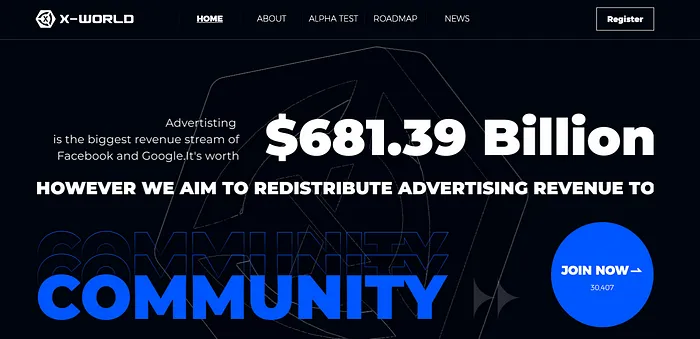
XWORLD, a pioneering Web3 App Store, provides a safe and trustworthy platform for users to explore a wide range of dApps and discover the treasure trove of Web3.

Visit the XWORLD website (www.xworld.pro) and follow Twitter (https://twitter.com/xworld_pro) to learn more about this exciting platform and embark on your Web3 journey today!
Join our community for more:
Website | Twitter | Instagram | Facebook |Litepaper
Enjoy Your Passionate Game Time, Every Second Becomes Your Income.


Sebelumnya
Embracing Web3: Unlocking the Future of the Internet
Seterusnya
Unleashing the Bitcoin Bonanza: 10 Dynamic Ways to Earn Bitcoin

August 1, 2023
Embracing Web3: Unlocking the Future of the Internet
Introduction
In the ever-evolving landscape of the internet, a new era is dawning — Web3. This groundbreaking technology promises to revolutionize the way we interact, transact, and create value online.
In this article, we will explore what exactly Web3 is, its key differences from its predecessors, and why it is crucial for everyone to embrace it early. We will also delve into some exciting ways for ordinary internet users to get involved in Web3, including an innovative platform-XWORLD, which offers a safe and rewarding Web3 experience.
So, fasten your seatbelts and get ready to embark on a journey into the future of the internet!
Evolution from Web1 to Web3
To understand the significance of Web3, let’s first take a brief look at its predecessors. Web1, also known as the “read-only” web, was characterized by static websites and limited user interaction. Then came Web2, the era of social media, e-commerce, and user-generated content. While Web2 brought about significant advancements, it also introduced issues like data privacy concerns and centralized control. Now, Web3 emerges as the next evolutionary step, offering decentralized, trustless, and user-centric experiences.
Key Differences and Real-World Examples
Web3 stands out from its predecessors in several ways. Firstly, it leverages blockchain technology, which ensures transparency, immutability, and security. This enables peer-to-peer transactions without intermediaries, empowering individuals to have full control over their data and digital assets. Real-world examples of Web3 applications include decentralized finance (DeFi) platforms like Compound and Uniswap, where users can lend, borrow, and trade cryptocurrencies directly, without relying on traditional financial institutions.
The Unstoppable Future of Web3
Web3 is not just a passing trend; it is the future of the internet. By embracing Web3 early, individuals can position themselves at the forefront of this technological revolution. Web3 offers opportunities for financial inclusion, creative expression, and community-driven decision-making. Moreover, it challenges the existing power structures and promotes a more equitable and decentralized internet. By being an early adopter, you can shape the future and reap the benefits of this unstoppable wave.
Getting Involved in Web3
Now that you understand the importance of Web3, you might be wondering how to get started. Here are some main ways for ordinary internet users to dive into the world of Web3:
1.Educate Yourself: Familiarize yourself with the concepts of blockchain, cryptocurrencies, and decentralized applications (dApps). Explore online resources, attend webinars, and join communities to expand your knowledge.
2. Experiment with dApps: Start using decentralized applications to experience the power of Web3 firsthand.
3. Invest in Cryptocurrencies: Consider investing in cryptocurrencies like Bitcoin, Ethereum, or other promising tokens. This not only allows you to participate in the digital economy but also positions you to benefit from the potential growth of Web3.
4. Support Web3 Projects: Engage with and support Web3 projects that align with your interests and values. Contribute to open-source development, participate in governance, or become an early user of innovative platforms.
5. Experience XWORLD: Your Gateway to Web3: One platform that stands out in the Web3 landscape is XWORLD. It offers a pioneering, safe, and trustable Web3 App Store, providing users with a seamless and rewarding Web3 experience. XWORLD rewards users’ time and attention with high-value assets like Bitcoin, creating an ecosystem where users are incentivized to explore and engage with Web3 applications.
Visit the XWORLD website (www.xworld.pro) and follow Twitter (https://twitter.com/xworld_pro) to learn more about this exciting platform and embark on your Web3 journey today!
Conclusion
Web3 is not just a buzzword; it represents a paradigm shift in how we interact with the internet. By embracing Web3 early, ordinary internet users can become active participants in shaping the future of the digital world. Whether it’s exploring decentralized finance, investing in cryptocurrencies, or supporting Web3 projects, there are numerous ways to get involved.
References
What Is Web3?
What is web3? (Published 2022)
Web3 - Wikipedia
What Is Web3?
XWORLD, a pioneering Web3 App Store, provides a safe and trustworthy platform for users to explore a wide range of dApps and discover the treasure trove of Web3.
So, don’t wait any longer — join the Web3 revolution and unlock the limitless possibilities of the internet’s future!
If you’re an Internet user interested in the future of Information Tech, follow XWORLD on Twitter at https://twitter.com/xworld_pro to stay updated on the latest developments in Web3 games, NFTs, and tokenomics.
Download: https://play.google.com/store/apps/details?id=pro.xworld.app
Join our community for more:
Website | Twitter | Instagram | Facebook |Litepaper
Enjoy Your Passionate Game Time, Every Second Becomes Your Income.
October 28, 2024
The Future of Digital Advertising: From Centralized Monopoly to User Empowerment with XWORLD
What was once one of the best-hidden secrets of the online world is not so secret anymore. The seemingly "free" internet comes at a cost: losing control over how our personal information is used. While we browse, our behavior and personal data are collected, analyzed, and monetized, turning us into the product without our consent.
Shifting the Paradigm of the Attention Economy
User data and their attention are the most valuable commodities in the digital age. Unfortunately, that sets the stage for an unfair fight, as traditional digital advertising models are often skewed in favor of large corporations. Internet giants like Google and Facebook dominate the digital ad space, generating billions of dollars by monetizing user information. To illustrate, Meta's ad revenue in Q1 2024 was $35.6 billion, while Google raked in $80.5 billion during the same period. This success relies on turning user behavior-searches, social interactions, and location data-into profitable insights for advertisers. However, as legacy platforms compete fiercely for user attention through tactics like infinite scrolling, personalized recommendations, and push notifications, users are often left with no control over how their data is used.
While ordinary users feel helpless in this monopolized environment, the recent Web3 revolution may bring us new possibilities. Let's take a closer look at how Web3 technology could change the digital advertising space.
Web3 and Decentralization: A New Digital Ecosystem
Web3 technology brings an opportunity to create a more equitable digital ecosystem. This new concept of digital advertising allows users to maintain control over their data, enabling them to choose how their information is used and to profit from their engagement.
Key features of this new, Web3-powered advertising model include:
Data Ownership: Users retain full ownership of their data and can choose to use it as they see fit.
Tokenized Incentives: Users are rewarded for their attention and participation, turning digital interactions into real-world value.
Fair Revenue Distribution: Both developers and users receive a fair share of ad revenue.
Several emerging platforms are utilizing Web3 concepts to move away from the centralized monopoly and give control back to the users. For instance, an application called XWORLD is attempting to put these ideas into practice. XWORLD is an advertising distribution platform built on Web3 principles, primarily focused on distributing games and apps. It provides game and app recommendations and, more importantly, seeks to distribute a portion of the advertising revenue directly to users. If this model succeeds, it could signal a radical shift in the entire industry. With nearly 5.5 million total users and over 600K daily users, XWORLD is among the leaders of this digital revolution revolution.
The core innovation behind XWORLD lies in the new value distribution. Rather than centralizing ad revenue, XWORLD rewards users for their participation and attention. This system redistributes a portion of the advertising revenue generated from game/app promotions to users, empowering them to monetize their digital interactions. The platform is built on the belief that users should be compensated for the value they bring to the digital space, thus creating a more balanced ad ecosystem. Almost $3 million of shared ad revenue through the XWORLD platform so far certainly proves that this concept can succeed.
However, bringing the new decentralized version of the Internet to people is not without challenges:
User Education: As many users are new to these concepts, it's essential to provide them with educational resources to ensure they understand how to take advantage of these platforms.
Technological Maturity: With blockchain technology still developing, Web3-based platforms need to be built to scale with the growing demand for decentralized applications.
Regulatory Landscape: Governments are yet to adapt to Web3 technologies, so there's work to be done to create legal frameworks that will foster a sustainable, decentralized advertising ecosystem.
A Transparent and Fair Future
By decentralizing value distribution and fairly rewarding all the participants, a dynamic Web3-based ecosystem will bring a new standard for fairness, transparency, and efficiency to the attention economy. Users no longer have to accept being exploited for their attention. Instead, they can actively participate and benefit from the value they bring to the table.
Website | Twitter | Facebook | Telegram | Discord
Unlock AD 3.0 – Profit from your influence, time, and online activities!
August 1, 2023
The League of Kingdoms’ Web3 Transformation
Unleashing the Power of Profit, Community, and Fun in Gaming through Blockchain Technology and revolutionizing the Gaming Landscape
In the ever-evolving world of digital gaming, one name stands out as a trailblazer in the industry: League of Kingdoms. This innovative game, listed on the XWORLD platform, is a testament to how Web3 technology can transform the gaming landscape by seamlessly combining profit, community, and fun.
The major titles of Web 3.0 games include Axie Infinity, where you can raise and collect different ‘Axies’, The Sandbox, which aims for open metaverse, and NBA Top Shot, which is a collection of sports player cards and games.
However, most Web 3.0 games at their current state are mainly focused on pursuing “profit” rather than “fun”, and merely emphasize on the fact that game players can acquire in-game item ownership through blockchain and NFT. In addition, as in the case of Axie Infinity, the issue of sustainability continues to be raised.
For a game to have sustainable gameplay and growth, it must not miss the ‘fun’ element as well as the ‘profit’ element. Only when player-focused ‘community’ element is integrated on top of these will it truly be a Web 3.0 game of the players, by the players, for the players.
League of Kingdoms is a 4X strategy game that takes the concept of gaming to a whole new level. The 4X strategy game refers to a strategy game that focuses on “EXplore,” “EXpand,” “EXploit,” and “EXterminate”.
GamePlay
In general, factors such as base construction, technology research, managing troops and resources, scouting surroundings, and rivalry and monster battles are part of the gameplay.
GamePlay of League of Kingdoms
There are a lot of ways to play it, such as plundering other kingdoms or farming monsters for various resources. Because playing with friends is more fun than fighting others, you can also join an Alliance. It also has multiple events that will let you complete various activities each day for unique rewards. The game has four standard resources to collect: Wood, Stone, Corn, Gold, and Crystals. While they can be easily farmed, the latter mostly come from events, quests, and store purchases.
Users who have played existing mobile games such as Clash of Clans and Rise of Kingdoms would find this kind of gameplay familiar.
Game-Changer
While the company took all the profits in Web 2.0 games, League of Kingdoms distributes a portion of the profits back to the players, just like what XWORLD is doing. Through $LOKA and $DST, the game is designed so that the community is enabled and rewarded for making their own game and governance operation through DAO is effectively possible.
League of Kingdoms is the game that has secured both “profit” and “community” along with “fun”. When the game was released, instead of initially disclosing the tokens, it first focused on the excellence and fun of the game to build a sustainable gameplay environment for players to thrive. They have already secured a loyal player base through excellent game quality, and now the team wishes to return to them more rights and rewards for their contributions to the game.
The gameplay is immersive, engaging, and designed to keep players on their toes. But what sets League of Kingdoms apart is its transformation into a Web3.0 game and Decentralized Autonomous Organization (DAO), combining profit with fun and sustainability.
Game Economy (NFT)
The transition to Web3.0 has allowed League of Kingdoms to incorporate blockchain technology into its core mechanics. This integration has led to the creation of a unique game economy, where in-game tokens play a crucial role. These tokens, which can be earned, traded, and used within the game, add a layer of complexity and excitement to the gameplay. They also provide a tangible reward for players’ time and energy, making the gaming experience more profitable and sustainable.
The potential of this type of gameplay is immense. By integrating blockchain technology, League of Kingdoms has opened up new avenues for player engagement and monetization. Players are not just consumers; they are active participants in the game economy, contributing to its growth and evolution. This level of player involvement is unprecedented in the gaming industry and sets a new standard for future games.
1. LAND
LAND represents ownership of certain coordinates of the continent within the game as an NFT. LAND holders can earn a certain portion of the revenue (10%) generated from the coordinate and increase the level of LAND by obtaining LAND development points. Its amount is limited to a total of 65,536 (256×256), and the higher the demand, the higher the value of the LAND will be.
2. Drago
Dragos can be owned or traded as NFTs. Drago boosts combat capabilities by putting magical enhancements on combat forces, and if you have Drago, you can gain $DST and $LOKA. The initially issued Genesis Drago is limited in total quantity and has one of five attributes: fire, wood, ice, light, and darkness.
3. Resources
Food, lumber, stone, and gold, which are important resources in the game, are produced every time the game play time passes, and accumulated resources can be issued as NFT and traded at OpenSea.
Game Economy (Tokens)
League of Kingdoms has two tokens: the governance token $LOKA and the utility token $DST. Representative P2E games that have separated protocol tokens into two in this way include “Axie Infinity” and “Star Atlas.”
In general, the reason for such separation of governance and utility tokens is to separate the inflation of goods that comes from gameplay and the inflation of blockchain governance that comes from staking.
1. LOKA (League of Kingdoms Arena)
LOKA is an in-game governance token that represents voting rights for the League of Kingdoms operations policy. You can get LOKA through gameplay, and receive in-game profits by staking.
$LOKA holders can decide on how to utilize League of Kingdom’s Council Vault (hereinafter referred to as ‘Treasury’) through governance staking. Treasury is incurred in marketplace transaction fees, in-game payments (on-chain payments), LAND sales, NFT upgrades, and bridging. This Treasury can be used in a variety of ways, including token burning, buyback, user compensation for P2E, landowner compensation, etc.
In addition to the usage of Treasury, governance can also vote on various factors in the game, such as land compensation rates. LOKA holders ultimately make decisions to enable long-term growth and sustainability for gameplay.
2. $DST (Dragon Soul Token)
$DST is an in-game utility token that is used to breed and raise Dragos. $DST is mainly used to breed Dragos. Each Drago has its own attributes and ratings, so players need a suitable Drago for every situation. As the number of players increase and the demand for Dragos grows alongside with it, the demand for $DST is also expected to increase.
In conclusion
League of Kingdoms is more than just a game; it’s a game-changer. Its innovative use of Web3 technology, unique game economics, and commitment to player engagement and profitability make it a standout in the gaming industry. As more games follow in its footsteps, we can expect to see a new era of gaming that is more engaging, rewarding, and fun.
XWORLD(xworld.pro), a platform dedicated to promoting high-quality games and apps, recognizes the value that League of Kingdoms brings to the table. XWORLD highly values the balance of profit and fun for all Internet digital citizens and rewards them for the time and energy they contribute. By listing League of Kingdoms, XWORLD is endorsing its innovative approach to gaming and its commitment to providing a rewarding and enjoyable gaming experience.
If you’re a gamer or an internet user interested in the future of gaming, follow XWORLD on Twitter at https://twitter.com/xworld_pro to stay updated on the latest developments in Web3 games, NFTs, and tokenomics. Don’t miss out on the revolution; join the League of Kingdoms and experience the future of gaming today.
Download: https://play.google.com/store/apps/details?id=pro.xworld.app
Enjoy Your Passionate Game Time, Every Second Becomes Your Income.


